
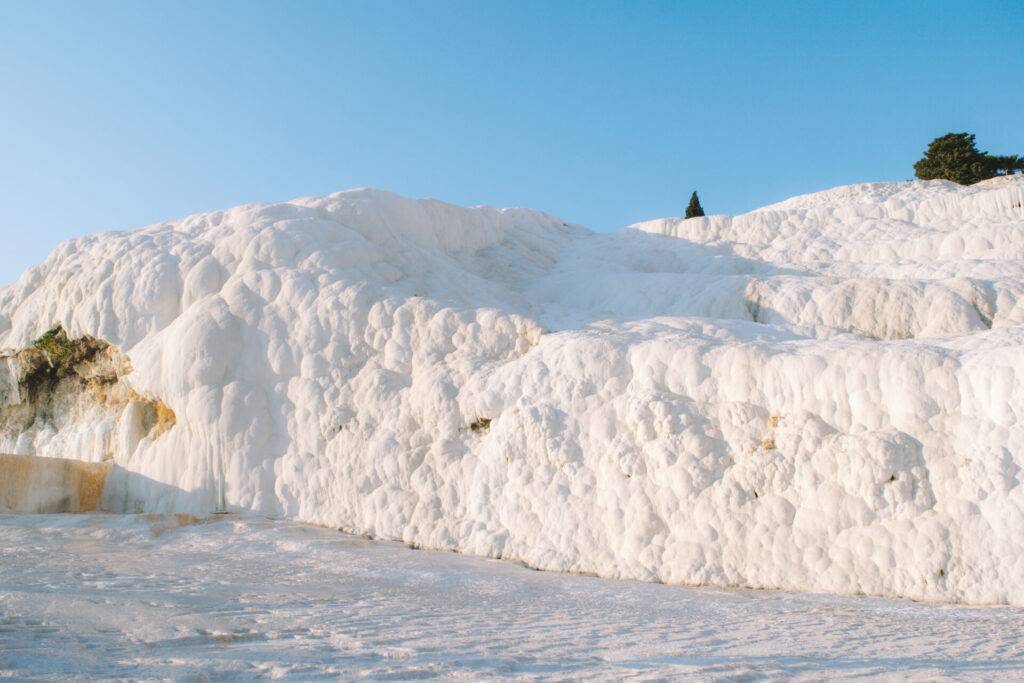
Pamukkale is one of Turkey’s most famous natural wonders, known for its bright white travertine terraces and warm mineral pools. Sitting alongside the ancient ruins of Hierapolis, it’s a place where nature and history are combined.
In this guide, you’ll find everything you need to plan your visit: how to get there, entrance fees, what to see inside the site, and practical tips to navigate your visit.
Disclaimer: This post may contain affiliate links from booking platforms. By booking through my link you are supporting my work, thank you so much!
How to Get to Pamukkale
Pamukkale is located about 18–20 km north of Denizli, the main transport hub for the area. Most routes funnel through Denizli first.
From Denizli (easiest):
- Minibus (dolmuş): From Denizli Otogar, minibuses to Pamukkale run every 15–20 minutes from the lower level, Gate 76. Ride time is ~30 minutes and you get off in Pamukkale village at the foot of the travertines.
- Taxi/Car: ~20–30 minutes to either entrance, depending on traffic.
From Selçuk/Ephesus:
- Take a train or bus to Denizli (around 3 hours), then switch to the Pamukkale minibus.
From Antalya or İzmir:
- Frequent intercity buses connect to Denizli, followed by the minibus to Pamukkale.
By Air (Denizli Çardak Airport – DNZ):
DNZ is ~65–75 km from Pamukkale. Take the HAVAŞ/airport shuttle to Denizli bus station, then the Pamukkale dolmuş. Driving takes about 1 hour.
Entrance, Tickets & Opening Hours
Pamukkale has two main entrances:
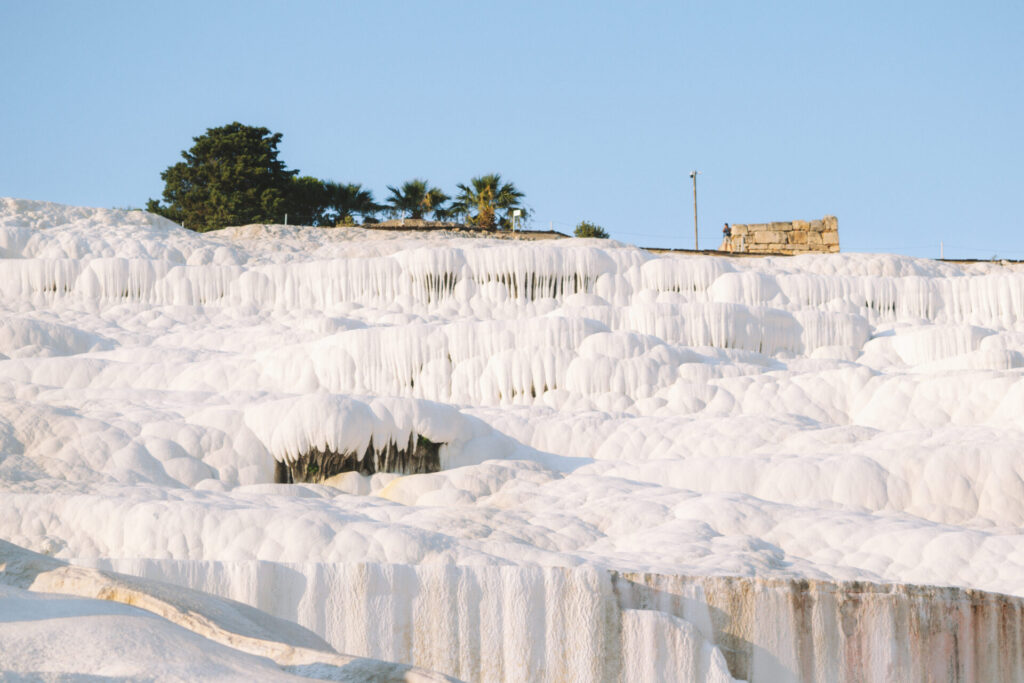
- Lower Gate (Village Entrance): Located right in Pamukkale village, this is where most visitors arrive. From here, you get the wow factor of seeing the travertines right in front of you, and you walk barefoot up the travertine terraces before reaching Hierapolis.
- Upper Gate (North Entrance): It’s closer to the main ruins and Cleopatra’s Pool. Best for people with mobility issues since the walk up the tavertines can be slippery and it is quite long.
Tickets & Prices (as of last check):
- Pamukkale & Hierapolis: ~30€
- Cleopatra’s Pool: Entry to the area around the pool is included, but swimming costs extra ( ~6€).
- Pamukkale Archeological Museum: Included in your site ticket.
Opening Hours (as of last check):
- Summer (Apr–Sep): Upper gate 08:00 – 21:00; Lower gate 06:30 – 23_00
- Winter (Oct–Mar): 08:00–18:00
- Last entry is usually one hour before closing.
- Cleopatra Ancient Pool: 08:00 – 20:00
- Hierapolis Archeological Museum: 08:00 – 17:00
What You’ll See in Pamukkale
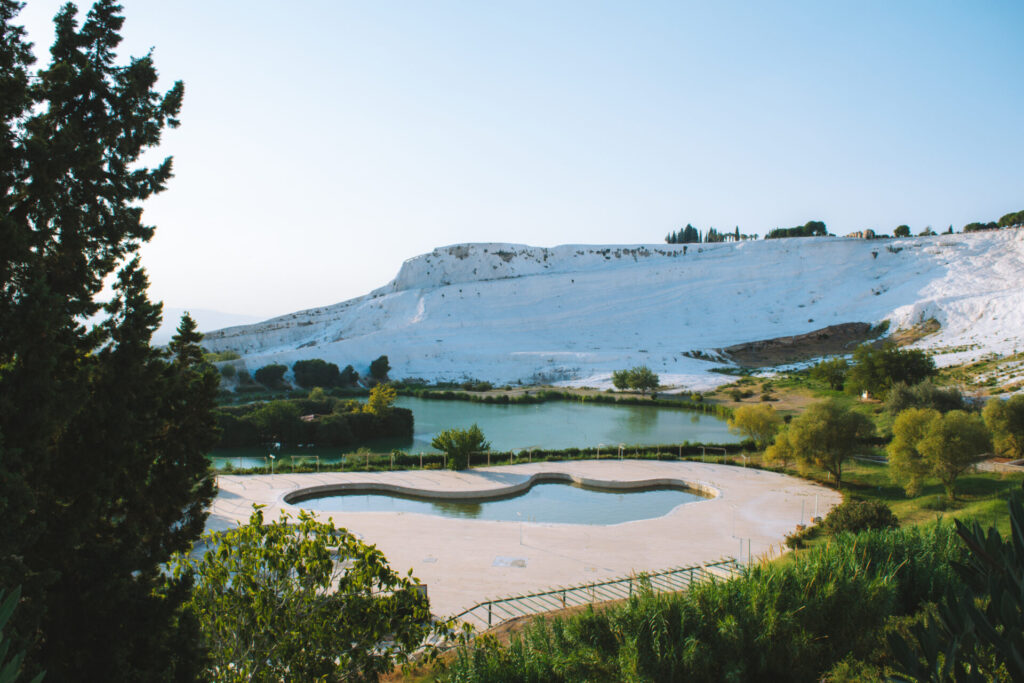
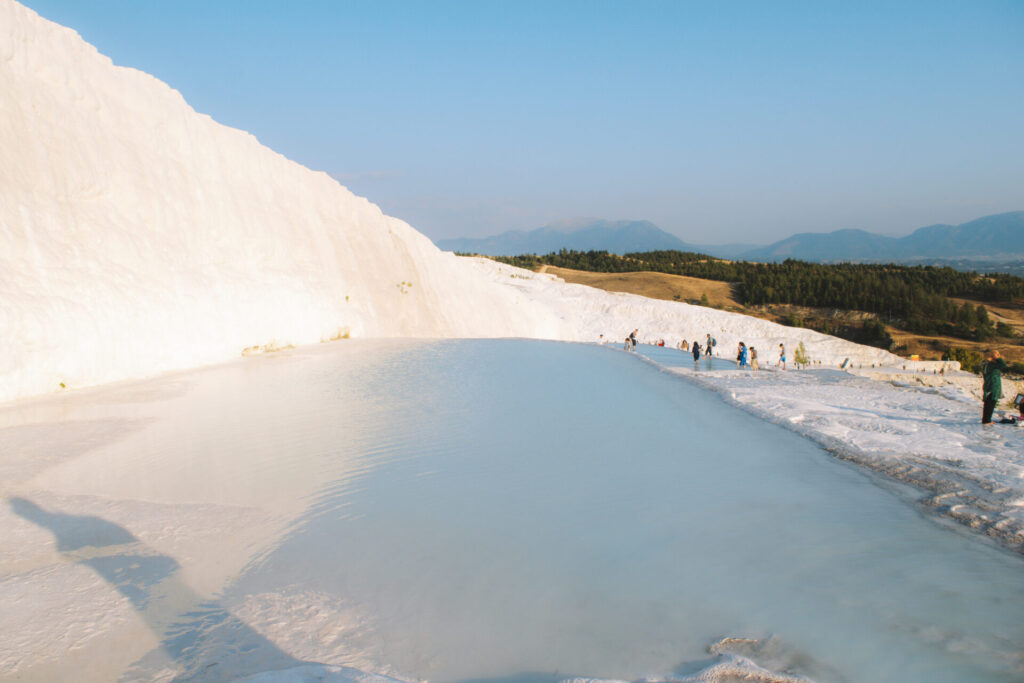
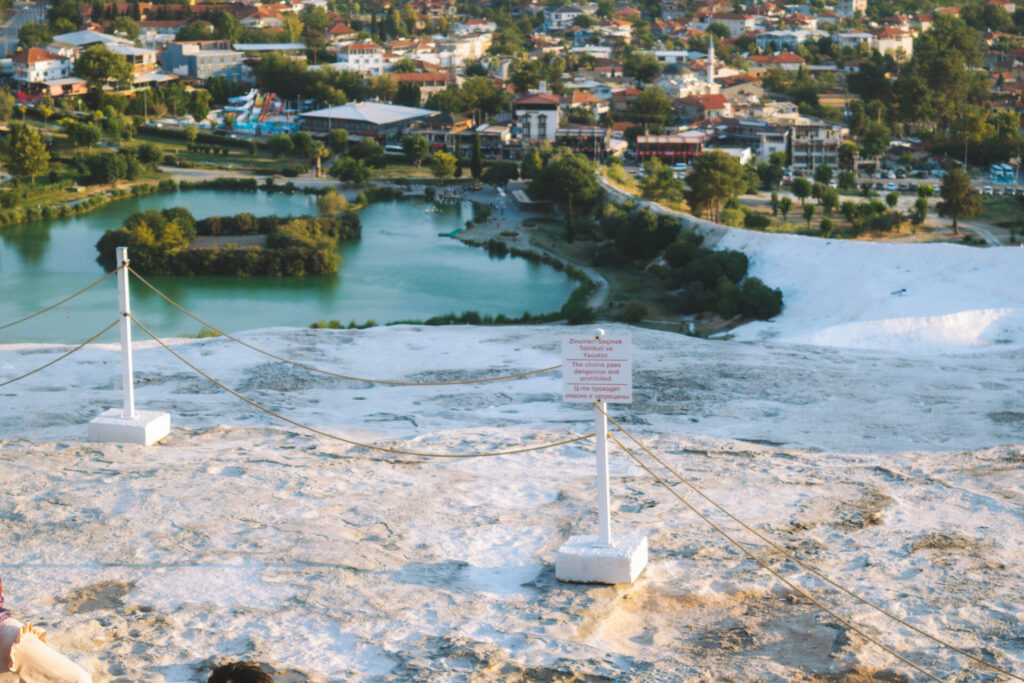
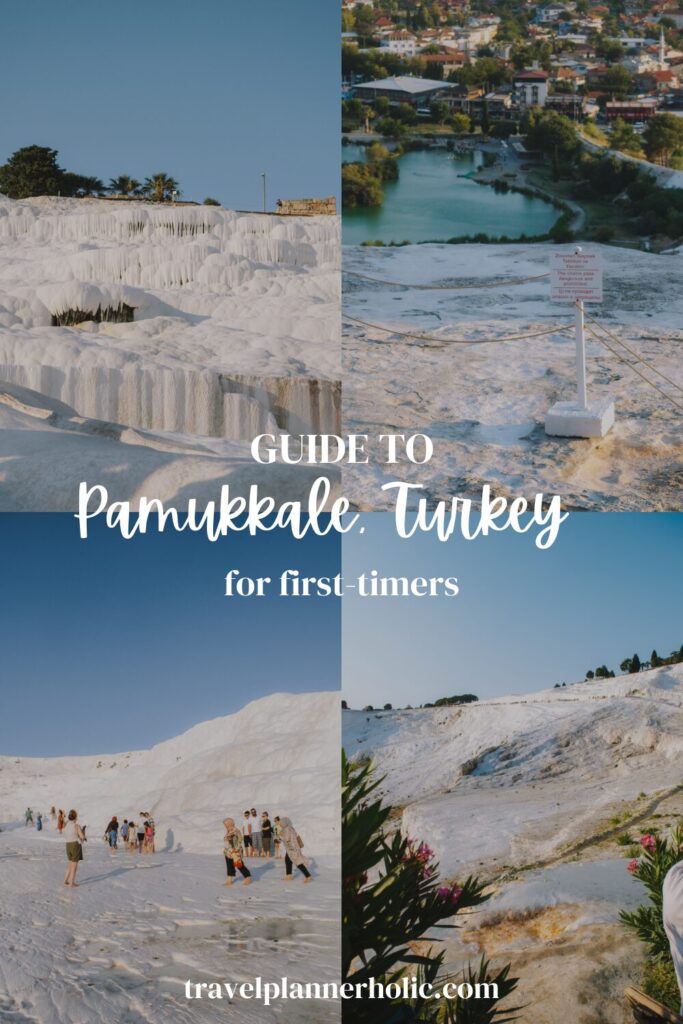
Pamukkale is best known for its travertine terraces: white, calcium-rich formations created over thousands of years by the thermal waters. In reality, many sections are now closed for preservation, and water levels can be low depending on the season. Still, walking the accessible terraces is a unique experience, with sweeping valley views.
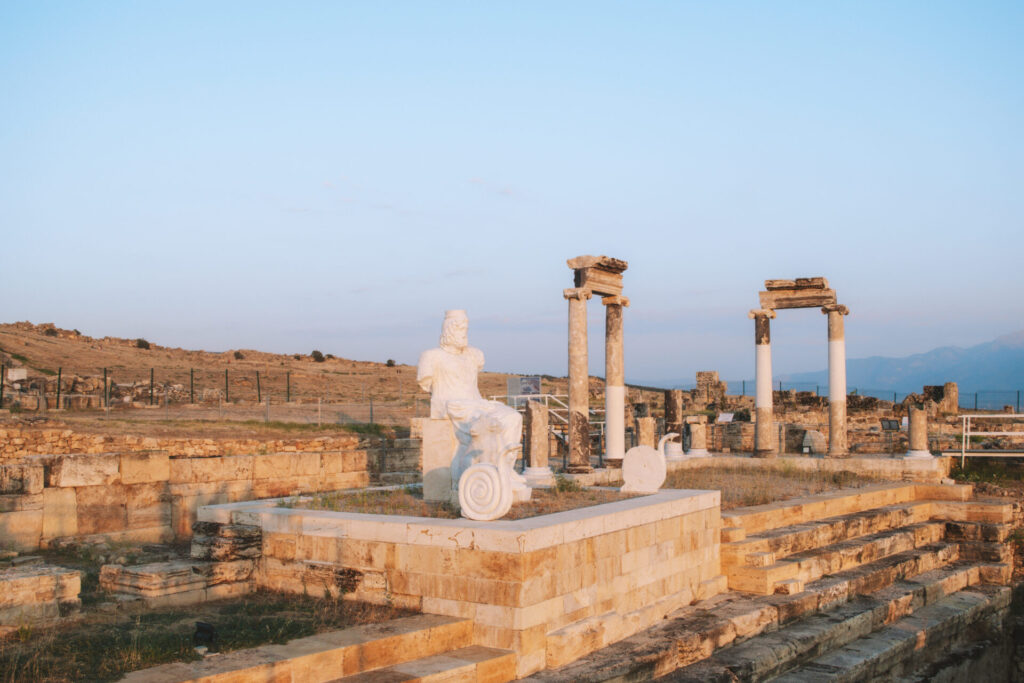
Above the terraces lies Hierapolis, an ancient Greco-Roman city built around the hot springs. Highlights include:
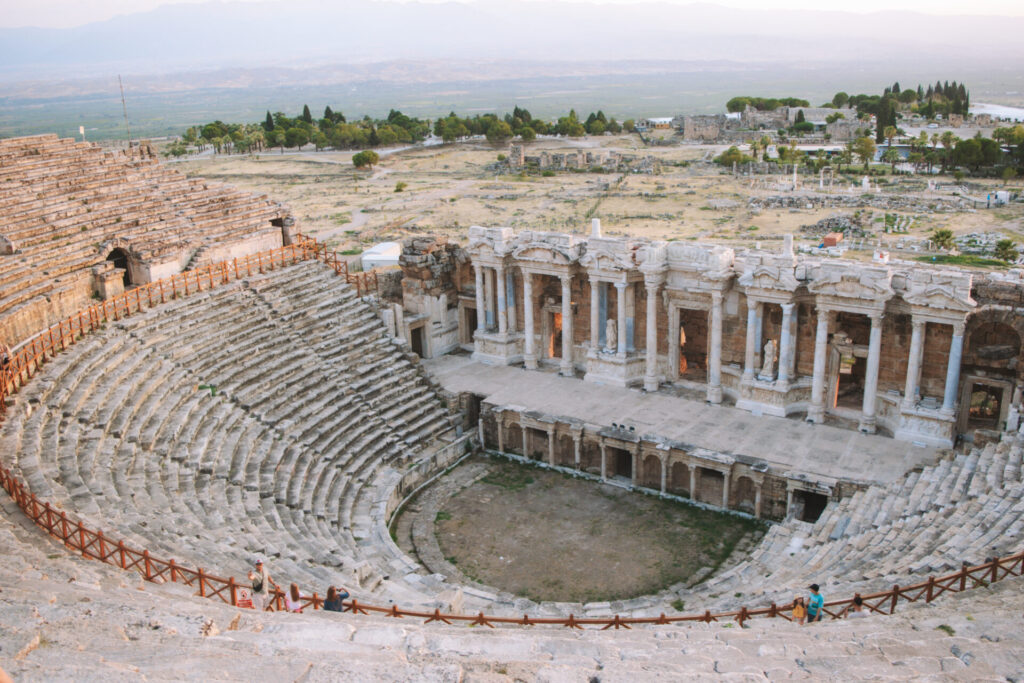
- The theatre, with panoramic views from the top.
- The vast necropolis, city gates, and Roman baths.
- The Cleopatra Ancient Pool, a warm mineral-rich swimming area with submerged marble columns, kept at ~36°C year-round. There are lockers and showers on the site.
- The Hierapolis Archeological Museum inside the ancient Roman baths, displaying artifacts from Hierapolis and nearby sites.
Tips for Visiting Pamukkale
- Best Time to Visit: Early morning and late evening is best for cooler temperatures, softer light, and fewer crowds. I went later, got to swim in Cleopatra Pool before closing, watched the sunset from the Hierapolis theatre and walked on the travertines at night – it was a very unique experience.
- Shoes aren’t allowed on the travertines to protect it and to prevent you from slipping; bring a small bag to carry them.
- A swimsuit under your clothes is handy if you plan to swim in Cleopatra’s Pool or paddle in the terraces.
- There’s little shade, bring sunscreen, sunglasses, and a hat.
- Carry water, especially in summer. Cafés are only near Cleopatra’s Pool and outside the gates.
- Starting at the lower gate means walking up the terraces then exploring Hierapolis; starting at the upper gate means doing the ruins first and walking down.
- Re-entry is generally not allowed with the same ticket.
- Credit cards are accepted at the ticket booths, but cash helps for small purchases inside.
Tips for Visiting Pamukkale
Pamukkale was beautiful, but it wasn’t exactly what I had pictured. I knew the terraces wouldn’t look like the dreamy photos that first made the place famous, but seeing how many were closed off and how little water there was in some pools still came as a surprise. It was impressive, just different, more of a natural wonder you admire from a distance than the postcard scene I expected to walk through.
What really made the visit special for me were the extras: wandering the vast ruins of Hierapolis, climbing up to the theatre for panoramic views, and swimming in the Cleopatra Pool among fallen columns. Those parts made the trip feel complete and turned what could have been a slightly underwhelming stop into one of the more memorable days of my journey through Turkey.
If you go with the right expectations, Pamukkale is still a unique mix of nature and history that’s worth experiencing.
Istanbul is a city that feels like two worlds at once, where Europe meets Asia, and centuries of
Cappadocia has been on my bucket list since I remember. Between the hot air balloons, the surreal landscapes,
2-Day Ayvalık Itinerary: What To See and Do We spent two days in Ayvalık as part of a
I hope this article “How to Visit Pamukkale: A Practical Guide for First-Timers“ helped you plan your trip to Pamukkale! Leave your opinion in the comments and follow me on social networks so you don’t miss my next trips. Use #travelplannerholic to get noticed.
With Love,
Catarina Vieira

Love this! So helpful! Def saving my my next visit
Thank you so much!
My first glance at the picture shocked me. I thought it was snow. Lol. I was thinking wow thats a lot of snow, then I realized. This is neat, I would love to see this area and the history that goes along with it. Thanks for the info.
Ahahah yes I see it! It is truly a unique place!
This reminds me of the Scala dei Turchi in Sicily, though that isn’t made of travertine. The pools look amazing!
I just searched for the place and yes I can see the similarities!
I also thought that I was looking at a snowy landscape when I saw your photos. It reminds me of seeing the salt flats in Sicily. I enjoyed your article!
I need to check those places in Sicily! Thank you so much!